The Pig-Blood Harvest
Stephen King Three Classic Novels Box Set: Carrie, 'Salem's Lot, the ShiningThe Pig-Blood Harvest is the preparation for the Spring Ball prank against Carrie White: Billy Nolan and five companions kill two sows at Henty farm and gather their blood in galvanized pails. The episode turns an idea of humiliation into a practical scheme, with animal blood chosen to make the planned assault at the dance possible.
Causes and Preparation
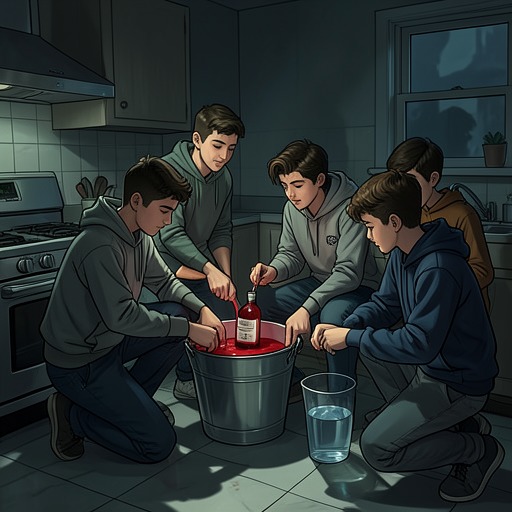
The account presents the plot against Carrie as possibly improvised rather than the product of a carefully worked-out plan. Its retrospective narrator suspects that Christine Hargensen was the scheme’s driving force, while acknowledging uncertainty about how much she had worked out in advance. He also supposes that she suggested going to Henty farm, where the boys could obtain the blood needed for the prank. Billy’s actions are bound to his devotion to Christine: the narrator says that his apparent excuse for the trip was not its real purpose, and that he would have done murder for her. Late at night, Billy drove a battered 1961 Biscayne up the rutted Stack End Road in North Chamberlain, its faulty headlight flickering over the rough, unpaved surface. Jackie Talbot, Henry Blake, Steve Deighan, Kenny Garson, and Lou Garson were crowded into the car with him. When they stopped near the barn, the group took a sledgehammer from the trunk and brought out two galvanized pails kept in an ice chest. The tools and containers make the purpose of the trip concrete: this was no longer only a proposal for a cruel joke, but a planned act of killing and collection.
Slaughter and Collection
At the hogpen, the plan met a moment of hesitation. The two sows were tame, and the old boar was asleep at the far end. Henry swung the sledgehammer experimentally, then admitted he could not go through with it and handed the tool to Billy. Lou stood nearby with the butcher knife. Billy took the hammer, and Kenny distracted the pigs with potato chips, talking to them as if the violence to come were a joke. His casual teasing sharpened the contrast between the animals’ ordinary behavior and the boys’ purpose.
Billy struck one sow, and Lou killed it. The boys recoiled at the suddenness of the act, but Billy immediately put a galvanized pail beneath the flow and filled it. When the first pail was full and the flow had dwindled, he insisted on killing the other sow too. Kenny called the second animal back toward the fence with the empty chip bag; Billy struck, and Lou used the knife again. The second pail filled, while the remaining blood ran into the ground. By the end, Billy was splashed to the forearms, and the killing had turned the prank’s premise into a physical substance the group could carry away.
Billy’s thoughts supplied the act with its own blunt rationale: “Pig blood for a pig.” He placed the pails in crushed ice, capped them, and closed the chest. The boys then pushed the car until it rolled, climbed in, and drove away with the blood packed in the trunk. Their departure completes the harvest as a practical step in the planned humiliation at the Spring Ball: the buckets are preserved and ready for transport, while the animals’ deaths remain the hidden cost of the joke.
The Blood Motif and the False Coronation
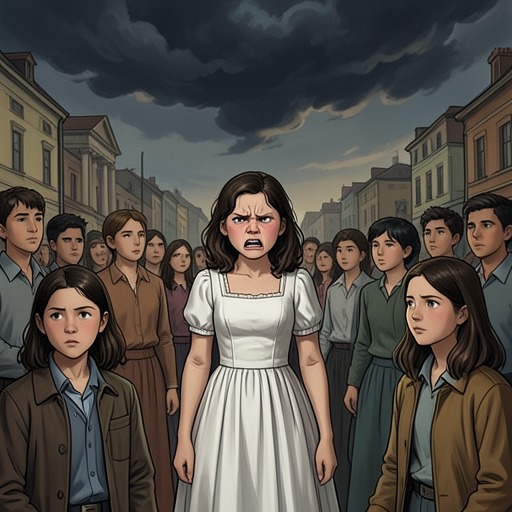
The harvest’s significance extends beyond supplying a prop for a cruel joke: it prepares the Spring Ball to repeat, in altered form, the humiliation that first made Carrie White’s blood a public spectacle. At sixteen, Carrie’s menstrual blood appeared on the shower-room floor before the other girls understood what was happening; their laughter and taunts turned a private bodily change into collective shame. The boys’ later use of animal blood deliberately echoes that earlier exposure. The substitution makes the prank seem like a joke about a pig, but its target is Carrie, and its force depends on making her body—and the memory of her first humiliation—visible again.
That renewed exposure comes after the dance briefly offers Carrie a contrary possibility. Vic Mooney announces that Carrie and Tommy Ross have won the King and Queen vote by a single ballot, and the crowd applauds as the two take their place in the ceremony. The apparent recognition is therefore poised directly against the prank: Carrie is raised up before the assembled students only to be drenched in blood before them. Her response recalls the shower-room scene with terrible precision. She recognizes the blood covering her, feels revulsion and shame, and remembers the earlier blood running down her thighs amid the shower and the girls’ demands. The harvested blood makes the crowning’s promise of acceptance collapse into a public reenactment of her original exclusion.
The episode also sharpens the Blood motif by placing different meanings of blood in collision. For Carrie, the blood at the dance does not remain an abstract prop; it returns her to a formative scene in which she was ignorant, exposed, and mocked. The prank’s organizers treat blood as a practical material, collected and preserved for use, while Carrie experiences it through the intimate memory of menstruation and humiliation. That gap between the perpetrators’ joke and its meaning to its victim helps explain why the prank becomes a turning point rather than an isolated insult.
The harvested blood does not itself account for the destruction that follows, but it enables the assault that precipitates Carrie’s retaliation at the dance. The violence then expands beyond the students: after leaving the church, Carrie turns back toward town as power transformers flare, high-tension wires fall into the streets, and people are injured or killed by the live cables. In that widening sequence, the blood collected in secret at Henty farm becomes part of a chain linking the boys’ calculated humiliation to the catastrophe overtaking Chamberlain.
Blood as a Contested Sign
The harvest also belongs to a wider pattern in which blood carries meanings imposed by other people. In the shower room, Carrie White does not initially understand why her body is bleeding; the other girls turn that confusion into ridicule. Margaret White supplies a different interpretation, teaching Carrie that Eve brought a Curse of Blood and a further curse of childbearing. At home, Margaret even wounds herself and marks the Bible with her blood, treating it as part of religious devotion. Against these meanings of shame, sin, and sacrifice, Billy Nolan’s blood collection is brutally practical: blood becomes a stored material for a planned public humiliation. The prank’s apparent simplicity depends on that disparity between the perpetrators’ prop and the history it will reactivate for Carrie.
The title names a preparatory action, but the action is already a compact rehearsal of the disaster’s larger violence. The boys arrive with a hammer, knife, ice chest, and pails; Henry’s hesitation gives way to Billy’s insistence, and the second sow is killed even after the first bucket has been filled. They preserve the blood on ice and leave with it, converting a late-night killing at Henty farm into the means of an assault staged before the school. The harvest therefore marks the point at which a cruel idea acquires a material form—and at which the blood motif moves from private bodily experience and religious doctrine into organized public violence.